People Following Jon's Blog

My Latest Tweet @ Twitter.com

Showing posts with label blockchain. Show all posts

Monday, April 16, 2018

What Is Blockchain? How Does It Work?

Blockchain is a term that gets bandied about a lot lately. It has become the "hot" buzzword in numerous different industries including the financial industry, the tech industry, the government public sector, the healthcare industry, the legal industry and elsewhere.  But what does the term mean, exactly?

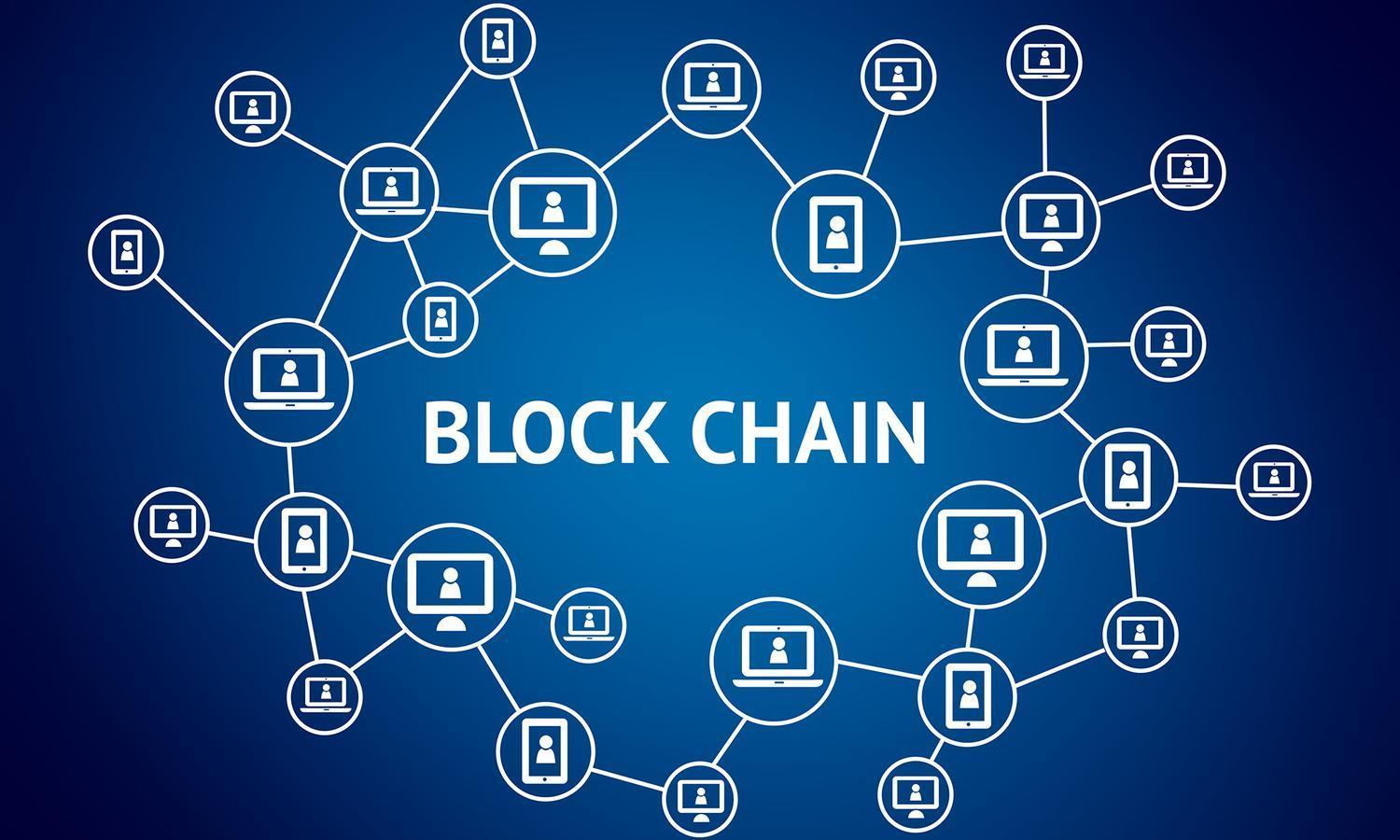
Simply put, a blockchain refers to a distributed ledger that contains unchangeable blocks of digital data - each block is attached to next one by cryptography, in a chain. It is a way for many people to see the same record of data/events/transactions all over the world in real time, and to request/get things from the system on pre-agreed terms. A distributed ledger is defined by Wikipedia as "a consensus of replicated, shared, and synchronized digital data geographically spread across multiple sites, countries, or institutions." Basically a bunch of data that is recorded/tracked/updated simultaneously so that all users/viewers see the most up to date version at all times.

Distributed ledgers tend to have the following common properties:
  • Use of cryptography to attach blocks of data and confirm/reconcile transactions (so that the system is not susceptible to fraud or manipulation)
  • Many copies of the ledger (and their simultaneous updates in real time) are available for viewing/tracking by everyone with access
  • Different levels of access control (viewing, editing, or both) can be set for users of the ledger - regulators and validators can be defined by the system - features can be set to public or private
  • Irreversible - once the ledger is updated and new data is recorded to it, the outcome is permanent and cannot be edited/manipulated later
Blockchain 1.0 refers to cryptocurrencies for cash transactions, while blockchain 2.0 refers to all financial applications except for currency transfers. Blockchain 3.0 refers to all applications outside the realm of currency and finance. See my prior January post on this topic, if you have questions. With this in mind, blockchain 2.0 and 3.0 offer exciting efficiency and cost improvements to business processes via the use of smart contracts.

Many smart contracts currently run on Ethereum. They create automatic, essentially free processes that are autonomous, self-sufficient and decentralized. Pre-agreed events trigger the execution of the contract, and execution and value transfer aspects to the contract proceed in an automatic manner. In this way, companies can remove middle men and costs from their business models to deal directly with counter parties without the need for costly escrow agents, approval/verification gateway service providers, claim validators, etc. By removing middle men, you also reduce the likelihood of errors within a process.

There are even now efforts to use the blockchain to create autonomous organizations, companies and societies. DAO (decentralized autonomous organization), DAC (decentralized autonomous corporation), and DAS (decentralized autonomous society) all use blockchain technology and smart contracts to create autonomously run entities - a virtual crossover if you will between a technological process and daily life.

Blockchain's key value added is that it reduces the need for people to do work - it automates and safeguards sensitive transactions and interactions in a trustless world. The technology is still very much in its early adaptation phase, much like the Internet was in the 1990s, but its long-term impact on businesses and industries may be profound.

Friday, January 19, 2018

Colorado Considering Blockchain Solution To State Data Storage And Sharing - But What Is Blockchain Anyway?

Greetings and happy Friday to everyone. More blockchain in the American news today, with Colorado considering the use of blockchain technology to improve data security for state records: https://www.coindesk.com/colorado-new-bill-encourages-state-to-adopt-blockchain-for-data-security

With all this talk of blockchain and distributed ledgers,etc., several folks may be wondering "What is this blockchain stuff we keep hearing about?"  I will attempt to describe it here and then comment on the Colorado news.

First and foremost, to understand blockchain you must understand what is distributed ledger technology.  Blockchain applies this technology as its core.  Distributed ledger technology (DLT) is a mechanism by which all transactions/interactions in a system are displayed to anyone with viewing access to that system.  All users/viewers have access to instantly updated copies and records of all transactions in the system, transactions are irreversible, transactions are reconciled by the use of encryption technology, and there are different levels of access control.  Blockchain basically replaces the usual trusted third party custodian (for example a bank or other intermediary) with "miners" who validate transactions and allow them to proceed if they are validated.

Think of it as sending money via a transfer without having to use the bank at all, or waiting 2-5 business days for the money to hit the recipient account. Using blockchain the money can be sent directly by one party to another without using a middleman or paying hefty transaction fees, and the money arrives instantaneously.  The transaction is verified via a series of complicated proofs undertaken by miners, none knowing what they are doing the proofs for or in what context the proofs relate.  They just do the proofs blindly in return for being compensated.  The proofs take the form of cryptography and computer algorithms called "hashing" that do not allow miners to trace their work back to the underlying transactions whatsoever.

There are three types of DLT: (1) permissioned and private ledgers (i.e., used by a private firm or government institution) that only allow specific parties to view the ledger and enter blockchain data; (2) permissioned and public ledgers that allow "anyone" to view the ledger, but only trusted users can enter blockchain data (Ripple the cryptocurrency is an example of this); and (3) unpermissioned and public ledgers that alllow anyone to view and enter blockchain data (Bitcoin is the biggest example).

There are also three types of blockchain to date.  Blockchain 1.0 relates to DLT being used for cryptocurrencies.  Blockchain 2.0 relates to "smart contracts" that use DLT for all financial applications other than money transfers.  Blockchain 3.0 relates to government and legal applications, healthcare applications, and the Internet Of Things.

With that said, and without knowing more about the Colorado blockchain proposal at issue, it is likely that they are talking about Blockchain 3.0 being used in combination with some form of permissioned DLT ledger.  This can speed up the data transfer process for records, permits and other paperwork by removing the current bureaucratic middlemen.  It also can provide more privacy to users and record holders, whose sensitive records and transactions could be hacked from the middleman's database or exposed by other means.  Colorado can solve waiting lines at government agencies by moving many processes online using blockchain.

Blockchain is moving into numerous areas and processes in the public and private sector, it is not only about cryptocurrencies and the price of Bitcoin.  It is about storage and distribution of data, of clearing transactions instantaneously and matching orders correctly so they cannot be faked.  It will be very cool to see how this platform gradually weaves itself into the fabric of our daily lives at many levels, hopefully for the better!

Friday, January 12, 2018

Green Energy Blockchain Project Launches In Estonia

WePower, a green energy blockchain trading platform, has announced a joint pilot project with an independent gas and electricity provider to "tokenize" energy data in Estonia on the blockchain. The the project will be a real-world test using anonymized data to demonstrate what the future of energy trading on a blockchain might look like throughout Europe.  For more information and links to the press release, see the Nasdaq link here: http://www.nasdaq.com/article/estonia-launched-green-energy-blockchain-project-cm904091

This is pretty exciting stuff, hopefully the project will be a success.  The project in this case relates to energy trading and allowing users to buy green energy for a discount to market prices via blockchain technology.  It is an early step into taking energy trading and green energy payments onto the blockchain, decentralizing the process and making it more libertarian.

Even if it has hiccups, it is a signal for the way things could look in the future.  For instance, one of the issues with the former Kyoto Protocol trading mechanism was that the ultimate number of carbon credits was uncertain and also the oversight over their production and issuance was inconsistent worldwide.  If one included the initially assigned Assigned Amount Units under the Kyoto Protocol, the market really didn't need many carbon credits to begin with, and this was made worse by the financial crisis of 2008-2009.  The market's solution was to largely ignore AAUs even though legally they could have supported the entire market needs by themselves and without anyone taking on any renewable energy projects.

Blockchain technology could play a role in fixing this problem for future regional or worldwide emission trading schemes.  A fixed number of tokens could be issued based on the scientific cap of emissions needed to be achieved to prevent negative climate change.  Eligible market participants could trade these units amongs themselves using blockchain technology without lengthy, costly, inefficient, or perhaps even corrupt government stakeholder interference.  Tokens could be differentiated by industry sector and/or subsector, and the cost for the tokens via token offerings to industry players could be set at an agreed level that would seek to capture the opportunity cost versus marginal cost of companies paying for cleanup at their sites themselves.  Then the tokens could freely trade among the eligible market participants, and participants could elect to submit one token as an offset for one ton of CO2 equivalent emissions from their sites each year.  Am I crazy or is this the sort of thing that could work well?

Monday, January 8, 2018

2017's Most Influential People in Blockchain

With the rising interest in cryptocurrencies and blockchain generally, and the daily value growth/fluctiation for coins, ICOs and their related contract applications, this is a really hot topic indeed.

Here is Coindesk's list of the most influential people in blockchain for 2017 - these people were prime movers and the shakers  in very moving and shaking industry!  Congratulations to the ones on this list and all the others who are helping to drive this industry forward.

https://www.coindesk.com/category/most-influential-2017/